
Against hopelessness
On political exhaustion, public division and the stubborn work of hope.

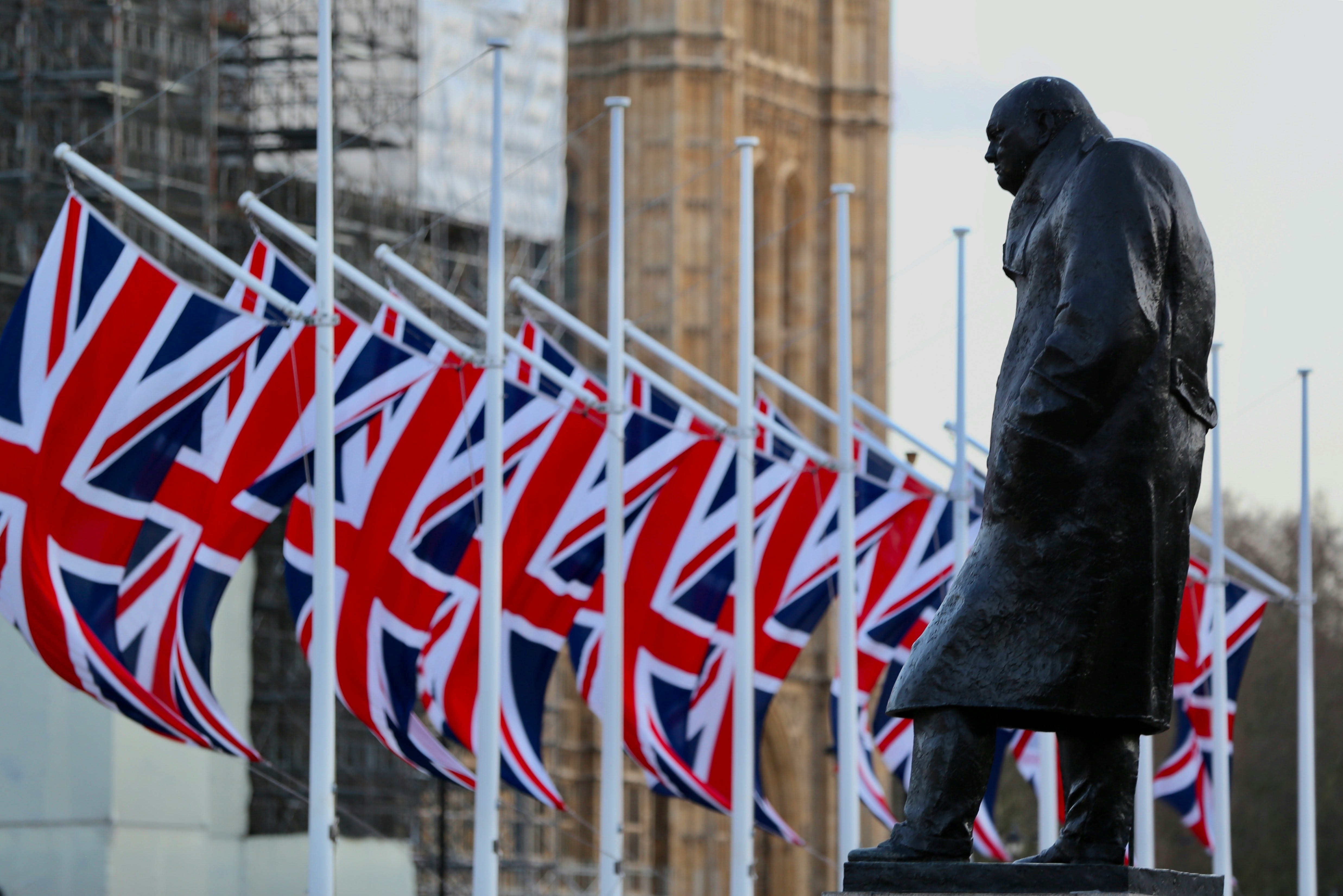
On Tuesday morning, I was on the bus to the Theos office in Westminster. The roads were particularly slow, with cordons up as preparations were underway for the King’s Speech and the State Opening of Parliament. As we drove past the Union Jack flags erected in Parliament Square and past the gold-shimmered Houses of Parliament, I felt anxious.
There had been much speculation in the hours preceding that Prime Minister Keir Starmer would be forced to resign by the end of the day, or at least set out a timetable for his departure. Ministers had begun to resign, 80 Labour MPs had joined a list calling for him to go.
Regardless of politics, my anxiety came out of a sense of foreboding that we were about to enter yet another period of political instability. Were we ever out of it? Gone were the days when Prime Ministers lasted for years. In the past 10 years, the UK has had six prime ministers, and we will likely have a seventh by the end of the year. These are extraordinary times.
We have had enough, and we are tired.
Ok, I was also anxious because I was a few minutes away from a call with a BBC producer, who would ask me what I wanted to do my Thought for the Day on, on BBC Radio 4’s Today programme the following morning. Thoughts for the Day are usually topical and need to involve an a-political, theological-but-accessible-to-people-of-all-faiths-and-none-profound-but-accessible reflection on what’s happening in the news. Oh, and all in 2mins 45 seconds.
My dilemma was that if Starmer were to resign that day, it would be tone deaf to not mention it in Thought for the Day. With a full day of meetings ahead of me, I couldn’t afford to write my Thought on one different topic (in my lunchbreak!) only for me to have to write another later on in the day. So I opted for the fudge of pivoting from Starmer’s speech at the start of the week on hope, to a wider reflection on what hope really means in these times. I also prepared an alternative opening paragraph just in case Starmer did resign (he didn’t, although that may yet be to come). It being the BBC, every word was raked over by the producer and editor, for any hint of political bias.
In my anxious state, I found a meditation on hopefulness cathartic. Wednesday also marked the launch of A Million Acts of Hope - a national invitation to celebrate the everyday acts of kindness, care and connection happening across the UK. “At a time when division can feel loud,” the organisers say, “we want to bring together all these everyday acts of hope and shine a light on the people and communities making them happen.”
The A Million Acts of Hope Week of Action (13-20 May) was timed to run over the weekend of the Unite the Kingdom rally, in which tens of thousands of people descended on London, headed up by Stephen Yaxley Lennon (Tommy Robinson).
For some, the crowds of people chanting that they wanted their country back alongside flags waving “Jesus is King” will be a hopeful sight. For others – me included – these scenes evoke in me a deep sadness. I’m reminded of growing up in south-east London in the 1980s and 1990s, terrified of the National Front and the BNP. I was 9 years old when Stephen Lawrence was killed round the corner from where I lived, and as a Black immigrant family in a predominantly white neighbourhood, it felt like there was nowhere to hide, and that we were not wanted. I feel this again now.
I find hope in the fact that there were many Christians among the crowds gathered at Unite the Kingdom rally, not the ones condoning the Islamophobia and racism (I’d like to have words with those Christians who do), but wanting to listen to the disenfranchised; to hear what would lead people to come out clad in their St George’s flags. Among them were some of my own team at Theos, braving the crowds to do some real research to find out information that might help us all navigate a more hopeful future together.
I’ve become increasingly convinced in recent years that we will get nowhere by simply shouting from the sidelines at those with whom we disagree. I feel that human encounter – if you can bear to be in the same room as someone whose views you abhor, and look them in the eye; if you can set up a listening station at a Far Right rally and see the humanity in their eyes – is the only way we’ll all get through this. Seeing each other not as enemies, but as people just trying to get through the rollercoaster. I am stubbornly convinced that humans looking each other in the eye can’t help but be drawn – even if it’s a mere smidge – towards each other.
5 things to read/watch:
1. Enjoy this humorous take on the Labour party’s psychodrama by my friend Sheyi Martins Allen
2. Check out A Million Acts of Hope
3. Read about Christians who set up a listening station at the Unite the Kingdom rally
4. Marvel at the genius of Led By Donkeys’ intervention at the Unite the Kingdom rally
5. Listen to my Thought for the Day on hope from last week’s BBC Radio 4 Today programme, and/or read the script below:
Good morning,
In Monday’s speech, Prime Minister Sir Keir Starmer used the word ‘hope’ 14 times. He said the country would see hope reflected in government policy, and that “people need hope.”
Today, faith groups and civil society organisations have launched a week-long initiative called A Million Acts of Hope – a nationwide invitation to celebrate the everyday acts of kindness, care and connection happening across the UK to combat the growing sense of division and polarisation so many feel.
Many of us in Britain today can’t help but sense a growing hope-lessness.
Perhaps it’s long been there and it’s the ever-present drum of social media and a 24-hour news cycle that have made it feel like it’s taken root.
Politicians of all parties have long employed the language of hope in their speeches. It’s an appeal to the very human instinct to believe there’s a future state or condition that will be better in some way.
But as a Christian, I believe hope is something much deeper than optimism, more than a sometimes blinkered decision to always look on the bright side. When in the book of Jeremiah God speaks of giving “a hope and a future”, it’s a profound promise of what’s to come, regardless of current circumstances.
Hope itself is also active and not static. As Emily Dickinson described in her 1861 poem, it’s like a bird, a thing with feathers, that “perches in the soul” and “never stops at all”.
As a nation – and as a world – we’ve been through so much in recent years: the worsening climate crisis, a pandemic, economic instability and turbulent politics. It feels like the nation can’t catch a break, and that we are breaking apart.
But by engaging in these million acts of hope, those participating are offering an alternative narrative.
As American episcopal priest Fleming Rutledge wrote this week, stories of acts of kindness across political divides help foster hope. For her, such illustrations “arouse feelings of neighbourliness where there might otherwise be only estrangement”. The sense of us all being in this together needs to be supported “not with morality lectures but with examples”, she wrote. “Don’t tell me! Show me!”
There’s an active selflessness to these hopeful acts of kindness – the millions we see and experience every day.
A reminder that we as a nation are capable of acting beyond our own self-interest to look at the needs of those around us, to participate in hope-making.
In these turbulent times, I find hope when I encounter others who show profound kindness. I feel most hopeful when those acts come from a group I’ve been told are ‘other’ to me in some way.
None of us should put our hope in politics alone, but perhaps each of us might see the face of God in the million small kindnesses of others that together point to a hope that’s much bigger, and much more profound.
Photo by Kristina Gadeikyte Gancarz on Unsplash
Love this, Chine.